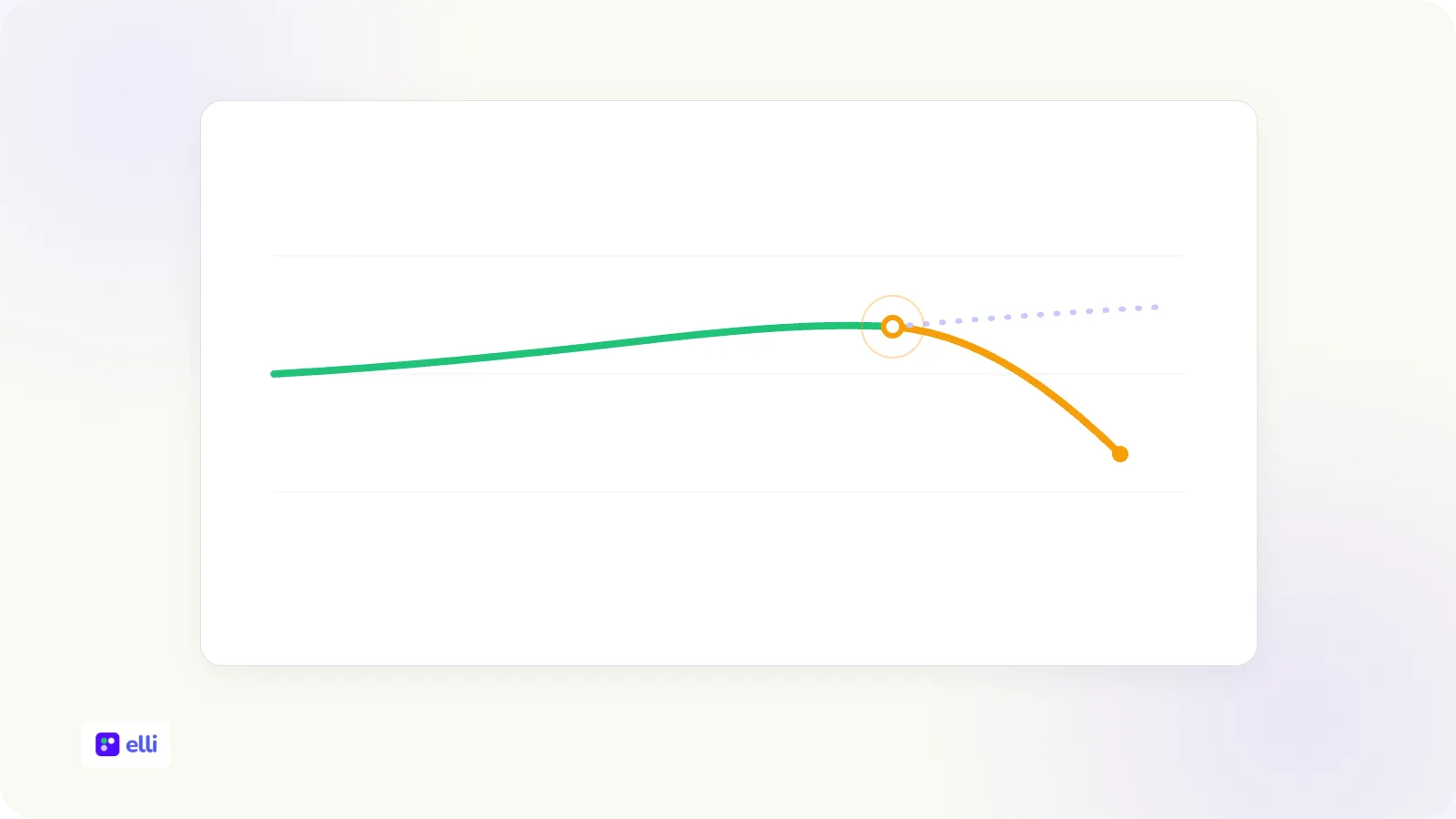
Sickness absence is not an inevitable consequence of workload, but a measurable symptom of a stumbling organisational architecture. The direct link between absence and workload costs organisations a fortune, certainly when, according to SD Worx, the direct wage cost of short-term absence climbs to an average of 1,600 euros per employee per year. Yet many leadership teams keep steering by the rear-view mirror: follow-up only begins once a sick-leave notice comes in. By then, you’re too late.
As an HR or reward lead, you’ll no doubt recognise the frustration. Unpredictable absence peaks disrupt the schedule, drive up the cost of interim staff and raise the load on those who remain. You feel the tension rising in certain teams, but hard evidence is missing until the moment valued colleagues drop out structurally or leave for good. With a proactive approach to absence and retention, you break this cycle.
In this article, you’ll discover how to translate the invisible link between workload and absenteeism into measurable data and targeted action plans at the team level. We analyse why traditional absence measurements fall short, which early warning signals make the difference, and how continuous risk analyses safeguard your workforce retention.
Key takeaways
- Discover how to expose the predictable link between absence and workload before the first sick-leave notice arrives, so you shift from ad-hoc firefighting to targeted prevention.
- Learn why traditional absence records and exit interviews create blind spots that mask the real wage cost of departures.
- Use segment analysis to identify overloaded teams in time and apply targeted interventions without inefficient one-size-fits-all solutions.
- Understand how structural workload undermines workforce readiness and directly blocks the adoption of technological innovations such as AI.
- See how elli’s technology turns measurement data into a concrete impact-effort matrix at the team level within 24 to 72 hours.
Contents
- the direct correlation between high workload and absence
- the blind spot of reactive absence policy
- segment analysis as an instrument for targeted prevention
- from workload to workforce readiness
- proactively managing absence risks with elli’s technology
the direct correlation between high workload and absence
The relationship between workload and absence follows a predictable pattern that leadership often only notices once the operational damage is done. A temporary peak does not knock an agile organisation off balance; teams typically absorb deadlines collectively. Chronic overload, by contrast, causes structural damage. Without recovery time, continuous pressure results in fatigue, reduced engagement and, eventually, absence. The fundamental link between absence and workload does not show up overnight, but builds up silently in the data over months.
Organisations that only act on the official sick-leave notice remain stuck in expensive ad-hoc interventions. According to data from TNO and CBS (National Working Conditions Survey 2025, published in April 2026), 21% of employees report burnout complaints, with more than 22% of those on absence citing excessive workload as the main reason. Anyone who wants to protect capacity and budgets therefore opts to improve their absence policy in time to guarantee continuity. Proactive risk analyses provide the only rational basis for a manageable workforce.
resilience versus load on the shop floor
The balance between task demands and energy resources determines when healthy work focus tips into acute absence risk. Load arises through quantitative overload, such as unrealistic deadlines or persistent understaffing. A team’s resilience, by contrast, rests on two crucial buffers: decision autonomy and collegial support. Within the conceptual definition of absenteeism , it becomes clear that absence is rarely purely a medical matter, but above all a response to a disrupted work context. NEA data from TNO and CBS shows that 60% of employees with a stressful role (high task demands coupled with low autonomy) were absent last year, compared with 52% on average.
short versus long absence patterns
Frequent short absence functions in practice almost always as the direct precursor of long-term absence due to structural overload. Where incidental absence is characterised by isolated notices spread across various departments, structural absence shows itself as a clustered rise in notice frequency within teams with persistently high workload figures. Recognising these patterns lets you expose tipping points in your organisation:
- Phase 1: Signal absence. Employees repeatedly call in sick for one or two days to catch their breath after peak moments.
- Phase 2: Capacity loss. The remaining team members absorb the work, so the resilience of the entire team declines further.
- Phase 3: Long-term absence. Once employees stay home for longer than four weeks, according to Securex figures (2025), 42% do not return to the shop floor within a year.
Anyone who detects this tipping point in time prevents a local capacity shortage from escalating into a permanent wage cost.
the blind spot of reactive absence policy
Waiting for the formal sick-leave notice is a strategic blunder for every HR lead. By the time an employee formally calls in sick with their line manager, the underlying problem has already escalated from temporary overload to structural exhaustion. Historical absence figures show what went wrong yesterday, not where operations will grind to a halt tomorrow. Nor do traditional exit interviews offer a way out; departing staff rarely name the true workload out of fear of damaged references or, quite simply, out of resignation. Anyone who only looks backwards misses the critical link between absence and workload in the build-up phase.
Even more insidious for your wage cost is silent absence, or presenteeism. Employees log in physically or digitally, but through persistent stress deliver only a fraction of their normal output. Errors pile up, deadlines slip and team members have to plug the gaps. This mechanism erodes operational continuity invisibly, long before a doctor’s note lands on the table. To stop unwanted turnover and productivity loss, organisations must build a modern retention policy around current capacity signals rather than outdated quarterly reports.
why your current data does not tell the full story
Aggregated absence percentages mask acute team problems. An organisation-wide figure of 5% looks comfortable, while one critical IT department or operational shift runs at 14%. Annual employee surveys miss the mark; a static snapshot does not capture dynamic workload spikes. Traditional HRIS systems only record the consequence (the absence), never the contextual cause such as sudden project pressure or disrupted processes. According to a CBS study on workload and absence duration , absence due to psychological overload leads to an average of 38 working days off. Without detailed insight at the team level, you systematically intervene too late.
the importance of wellbeing analytics
The shift to prevention calls for wellbeing analytics: the systematic analysis of anonymised stress indicators and work patterns to reliably predict absence risks. By correlating subjective workload indicators with operational metrics, you transform vague gut feelings into hard steering information. This requires strict data protection. Only with guaranteed anonymity and full compliance with the AVG and GDPR do employees dare to answer honestly. If you want deeper insight into how an organisation-wide risk analysis connects people and change, consult the insights in the human-ready transformation white paper. The goal remains clear: expose vulnerabilities before overload leads to an operational standstill.
segment analysis as an instrument for targeted prevention
A uniform approach to absence prevention does not work in a complex organisation. Universal initiatives such as generic workshops ignore the reality on the shop floor: the operational load of a shift in a logistics hub differs fundamentally from the mental pressure on a legal team. Anyone who tars all departments with the same brush wastes resources without solving the underlying problem. With segment analysis, you break the organisation down into groups of employees who experience the work in a similar way. In this way, you accurately map the real link between absence and workload per department or role group.
By tying measurement data to a clear team level score, you see at once where psychosocial risks peak. This composite index shows overload at a glance, without you needing to inspect individual answers. That guarantees strict anonymity and protects trust. By linking these insights to employee retention analytics, you tie stress signals directly to potential turnover risks. You discover which teams are at risk of dropping out long before the formal resignation or long-term sick note follows.
identifying risk groups without pointing fingers
Data analysis brings structural patterns to light across shifts, roles and seniority. New employees often struggle with friction due to poor onboarding processes, while senior staff more often buckle under creeping overtime and heightened responsibility. In line with the EU-OSHA guidelines for psychosocial work load , this calls for a proactive, systematic assessment of the work environment. Psychological safety forms the foundation here: teams must be able to discuss pinch points openly without fear of repercussions or individual blame.
from data to a team-focused approach
The real levers for reducing absence almost always lie at the team level, not with the individual. Line managers play a pivotal role here. When you equip them with an objective team level score, the conversation shifts from vague frustrations to concrete operational bottlenecks:
- Restore autonomy: team leads redistribute tasks and scrap superfluous control mechanisms.
- Set priorities: non-urgent projects are paused to lift acute overload.
- Adjust capacity planning: structural understaffing in shifts becomes immediately visible to HR.
Segment analysis doubles the effectiveness of HR interventions because resources are deployed exclusively where the objective data demonstrates acute friction. This transforms risk management from a theoretical exercise into targeted action.
from workload to workforce readiness
Structural overload directly sabotages your employees’ readiness for change. When teams are permanently firefighting, the cognitive space to integrate new work processes or digital systems is missing. Transformation programmes rarely stall on the technology itself; they run aground on exhausted people. The tangible link between absence and workload shows itself here in plummeting workforce readiness: teams that are physically or mentally at the end of their tether simply refuse to absorb extra complexity. Anyone who wants to roll out technological innovations such as AI across overloaded departments creates no efficiency gain, but accelerates absence.
Strategic goals require agility, but persistent workload causes rigidity. When the distance between strategic leadership ambitions and human absorption capacity becomes too great, absence percentages rise exponentially. Organisations must therefore continuously measure how heavy the daily load weighs before launching new projects. Absence is, after all, the ultimate brake on organisational progress.
change fatigue as a catalyst for absence
Change fatigue builds up cumulatively through successive restructurings, system migrations and process changes without intermediate recovery periods. In pulse surveys, this phenomenon does not show up as open protest, but as apathy, cynicism and a sharp decline in initiative. Employees mentally withdraw. Without an objective baseline measurement of change readiness ahead of a transformation programme, you stack new demands on a shaky foundation and force avoidable absenteeism.
the role of the impact-effort matrix in prevention
To quickly give overloaded teams room to breathe, categorise interventions via an impact-effort matrix. This model prevents line managers from bogging down in complex long-term plans while the shop floor needs relief today. The prioritisation runs clearly:
- Quick wins (high impact, low effort): scrap superfluous status meetings, set clear communication quiet hours and simplify internal approval flows.
- Big projects (high impact, high effort): redesign structural shift rosters or redistribute task packages across operational roles.
- Pitfalls (low impact, high effort): avoid time-consuming committees or generic information sessions that only further burden calendars.
By tying action plans directly to measurable KPIs at the team level, you systematically track progress. That way, the link between absence and workload does not remain a vague abstraction, but becomes an operational steering parameter.
Read the white paper on change readiness
proactively managing absence risks with elli’s technology
Traditional measurement instruments put a finger on the wound once the suffering has already occurred. The elli platform bridges the gap between recording signals and executing targeted actions at the team level. Where classic HR systems get stuck in unwieldy reporting, elli activates a live dashboard within 24 to 72 hours, without a heavy IT project or the involvement of external consultants. Thanks to a modular survey library with more than 800 validated questions, you probe purposefully into task load, autonomy and work experience. In this way, you make the underlying link between absence and workload immediately transparent and reversible through continuous measurement.
Continuous monitoring prevents your policy from ageing. Instead of guessing at the effectiveness of HR measures, current data shows directly whether interventions ease operational pressure.
insight at every level of the organisation
Effective prevention requires transparency from the boardroom to the shop floor. elli automatically translates complex datasets into actionable insights and prioritises them via a clear impact-effort matrix. Team leads see directly which interventions are within their reach to lower the load, from process adjustments to scrapping administrative noise. The human-in-the-loop approach is central here: the technology identifies the risk patterns, but line managers keep the context and, in dialogue with their team, determine the most appropriate follow-up.
ready for the future with workforce intelligence
For organisations between 200 and 2,000 employees, workforce intelligence offers the ideal balance between scalability and local agility. The protection of personal data forms the absolute foundation for a reliable feedback culture:
- Strict anonymity threshold: dashboard results only open from a minimum of fifteen respondents per segment, to rule out individual traceability.
- European security standards: the platform is built within the EU, ISO 27001-certified and fully compliant with the AVG and GDPR.
- Direct operational follow-up: line managers act independently on concrete recommendations without lengthy advisory trajectories.
By translating subjective workload into objective steering data, a robust retention policy emerges. In this way, you keep a grip on personnel costs and proactively manage the link between absence and workload, long before capacity comes under threat.
take control of your workforce capacity
The link between absence and workload need not remain an operational blind spot. Organisations that stop recording reactively and switch to continuous risk analyses transform unpredictable staff absence into a manageable factor. By intervening in time at the team level, you protect not only operational continuity, but also strengthen the foundations for future innovation.
With elli, you realise this shift without delay. You activate an operational dashboard within 24 to 72 hours, without consultants or drawn-out IT programmes. Thanks to a strictly anonymous methodology that functions fully in line with the AVG, GDPR and the AI Act, you place the data in line managers’ hands to remove friction directly.
Discover how elli transforms your absence policy
Choose measurable certainty today and build resilient teams that are ready for tomorrow’s challenges.
frequently asked questions
what is the main link between absence and workload?
The main link between absence and workload lies in the absence of structural recovery time under persistent overload. Where a temporary peak is absorbed collectively, chronic workload leads to physical and mental exhaustion. That first translates into rising short-term absence and presenteeism, after which it tips into long-term absence. Without timely intervention at the team level, this dynamic undermines operational capacity and inexorably drives up wage costs.
how can I objectively measure the workload in my team?
You measure workload objectively by deploying continuous measurement instead of static annual surveys. Combine validated questions on task demands, autonomy and collegial support with operational data such as overtime and capacity load. By aggregating this information into a clear team level score, you see directly which departments are structurally overloaded. That delivers pure steering information without lapsing into subjective assumptions or outdated quarterly reports.
why does absence rise despite a good wellbeing policy?
Absence often rises because traditional initiatives do not change the actual operational processes. When workload remains structurally too high through understaffing, outdated systems or unclear priorities, relaxation initiatives offer no relief. Effective prevention tackles the source of the overload on the shop floor itself. Only when you remove pinch points in task allocation and autonomy at the team level do absence figures fall and retention actually improve.
is there a difference between workload and workload volume in absence analysis?
Workload volume stands for the objective quantity of tasks, assignments and deadlines that must be completed within a given time. Workload, by contrast, refers to the subjective experience that arises when that volume exceeds capacity. A high workload volume only leads to absence when employees experience too little autonomy, unclear instructions or insufficient support to carry out the work properly and within a healthy timeframe.
how does predictive analytics help prevent burnout?
Predictive analytics identifies subtle deviations in team data long before an employee definitively drops out with burnout. By correlating patterns in frequent short absence, declining engagement and structural overtime, the technology detects elevated risk profiles per segment. HR leads thereby receive timely warnings to intervene in a targeted way with practical capacity adjustments. You definitively shift the focus from reactive administration to proactive damage limitation at the team level.
how do I handle privacy when measuring psychosocial risks?
Safeguard privacy by working with strict aggregation thresholds and guaranteed anonymity. Ensure measurement results are never traceable to individuals by only opening dashboards from a minimum of fifteen respondents per team or segment. Choose technology built within the European Union that complies with AVG, GDPR and ISO 27001 standards. This transparent data protection creates the trust employees need to give honest answers.
what are the costs of absence due to excessive workload?
The financial impact of the link between absence and workload quickly runs into tens of thousands of euros. According to analyses from SD Worx, the direct wage cost of short absence averages more than 1,600 euros per employee per year. For an organisation with a hundred employees, that quickly amounts to 160,000 euros in direct expenditure. Indirect costs such as disrupted schedules, production loss and expensive interim staff push that total bill significantly higher.
how quickly can I see results from a new absence approach?
With modern workforce intelligence, you see the first insights almost immediately. A data-driven platform delivers an operational dashboard within 24 to 72 hours without a heavy IT project. Quick wins from the impact-effort matrix then produce noticeable relief on the shop floor within a few weeks. A structural drop in short absence and rising retention become visible within one to two quarters after the first targeted interventions.